
English| EUR
Suggested for you
More currencies
Choose a language
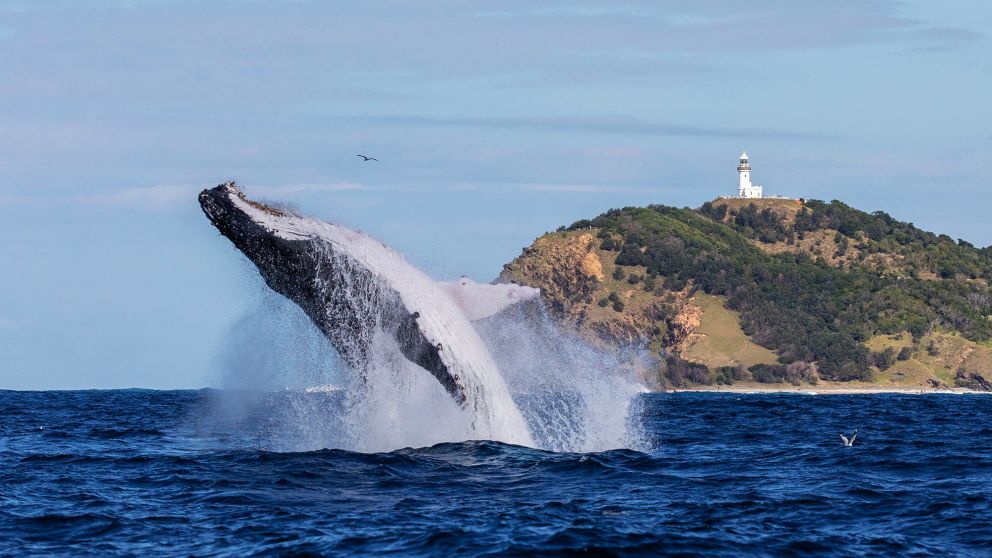
Between June and November each year, thousands of humpback whales pass through Cape Byron Marine Park on their annual migration along Australia's east coast. Kayakers launching from Clarkes Beach, The Pass, and Belongil Beach can paddle within the sanctuary zone boundaries during this window, governed by strict approach distances and no-chase regulations.
Quick answer
You can kayak Byron Bay whales from early June through late November, with the highest whale counts recorded between late July and early October as humpbacks travel north to breed and return south with calves. Cape Byron Marine Park enforces a 100-metre minimum approach distance for all vessels including kayaks. Morning departures between 07:00 and 11:00 offer calmer water and better visibility for observing breaching, tail-slapping, and spy-hopping behavior without disturbing the animals.
Cape Byron Marine Park protects 22,000 hectares of ocean where the continental shelf pinches close to shore, funneling migrating humpback whales within two kilometres of the coastline. This topography makes Byron Bay one of the few places in New South Wales where sea kayakers can observe whales from a human-powered craft without needing a motor vessel. The northbound leg of the migration peaks between late June and mid-August, as adult whales move toward warmer breeding grounds off Queensland. Southbound traffic intensifies from September through November when mothers escort newborn calves back to Antarctic feeding waters. Calves born in tropical waters lack the blubber reserves of adults and travel closer to shore in sheltered bays, increasing the likelihood of sightings from a kayak but also raising the stakes for responsible observation. New South Wales marine parks legislation prohibits any vessel—motorised or paddle-powered—from approaching within 100 metres of a whale or positioning itself in the animal's path. Kayakers who find themselves inside this buffer because a whale surfaced nearby must stop paddling, remain stationary, and allow the animal to pass. Launch sites within the marine park include Clarkes Beach near the town centre, The Pass for experienced paddlers comfortable in shore break, and Belongil Beach to the west where a tidal creek mouth offers flatter entry conditions. All three beaches sit within or adjacent to sanctuary zones where commercial fishing is restricted, concentrating baitfish schools that attract dolphins, turtles, and occasionally whales feeding opportunistically during migration. Paddlers should carry a VHF radio or mobile phone in a waterproof case, wear a brightly coloured rashguard or PFD for visibility to other water users, and check the Bureau of Meteorology's coastal wind forecast before departure. Afternoon nor-easters common between October and March can turn glassy morning conditions into whitecaps by midday, complicating the return paddle and reducing whale-spotting range. Whale watching from a kayak eliminates engine noise that can alter animal behavior, but it also removes the safety margin and observer height of a commercial whale-watch vessel. Humpbacks are acrobatic and curious, occasionally approaching stationary kayaks to investigate. Maintain a low profile, avoid sudden paddle movements, and never attempt to touch or feed any marine animal. Breaches occur without warning and generate significant displacement waves at close range.
“Cape Byron's narrow continental shelf funnels migrating humpbacks within two kilometres of shore, closer than almost any other point on the New South Wales coast.”
The migration of humpback whales through Cape Byron Marine Park occurs annually from June to November. For optimal conditions, visitors should aim for the 07:00–11:00 arrival window to experience calmer waters and heightened wildlife activity.
15°C to 20°C. Peak migration begins as whales move north. Morning conditions offer the highest probability of sightings.
18°C to 24°C. Whales return south with calves, often staying closer to the coastline. Early sessions remain the most consistent.
—
Mid-week mornings provide reduced vessel traffic, which can improve wildlife visibility and provide a quieter paddling experience.
Verdict: The best opportunity to encounter whales is during the peak of the migration season from June to November, specifically arriving during the 07:00–11:00 window.
Cape Byron Marine Park remains open 24 hours a day, seven days a week. This constant access facilitates early morning kayak departures when water conditions are most favorable for whale and dolphin watching.
Access to Cape Byron Marine Park does not require an entrance fee. Costs associated with visiting the area are limited to vehicle parking at nearby precincts.
Verdict: A typical visitor pays 0 AUD for park entry, with total costs depending solely on local vehicle parking fees.
Cape Byron Marine Park is located along the coastline of Byron Bay, New South Wales. Access to launch points for kayaking is primarily facilitated via the main beach precincts in the town center.
Follow the M1 Pacific Motorway and take the Ewingsdale Road exit into Byron Bay
Take regional services to the Byron Bay Interchange on Butler Street
Walk from the Byron Bay town center toward the shoreline via Bay Street or Lawson Street
Plan your arrival for the best arrival window of 07:00–11:00 to take advantage of calmer morning waters and improved conditions for spotting marine life.
Prepare these essentials before heading out to watch whales from your kayak in Cape Byron Marine Park.
Everything you need to know about kayak byron bay whales
Yes, migrating humpback whales are frequently spotted in the Cape Byron Marine Park, especially during their northern and southern migrations. Paddling through these waters offers an intimate perspective of the diverse marine life in the region.
The prime season for viewing these mammals coincides with their migration, typically peaking between June and November. Booking a kayak byron bay whales excursion during these months increases your chances of witnessing surface activity.
There is 0 AUD entrance fee for the marine park itself. However, be aware that fees apply for vehicle parking at nearby precincts.
Cape Byron Marine Park is open daily from 00:00–23:59. While the park is accessible at all times, marine activities are best conducted during daylight hours for safety and wildlife visibility.
Most tours accommodate families, though minimum age requirements may apply depending on the operator. It is essential to check specific tour requirements before booking your kayak byron bay whales adventure.
The best arrival window is 07:00–11:00. This period offers optimal light, calmer morning waters, and better wildlife activity for whale and dolphin watching.