
English| EUR
Suggested for you
More currencies
Choose a language
Cape Byron Marine Park offers some of Australia's most accessible sea kayaking, but pricing varies widely between operators, tour lengths, and seasonal demand. This guide breaks down the cost structure for guided tours, equipment rental, and the trade-offs between budget and premium experiences.
Quick answer
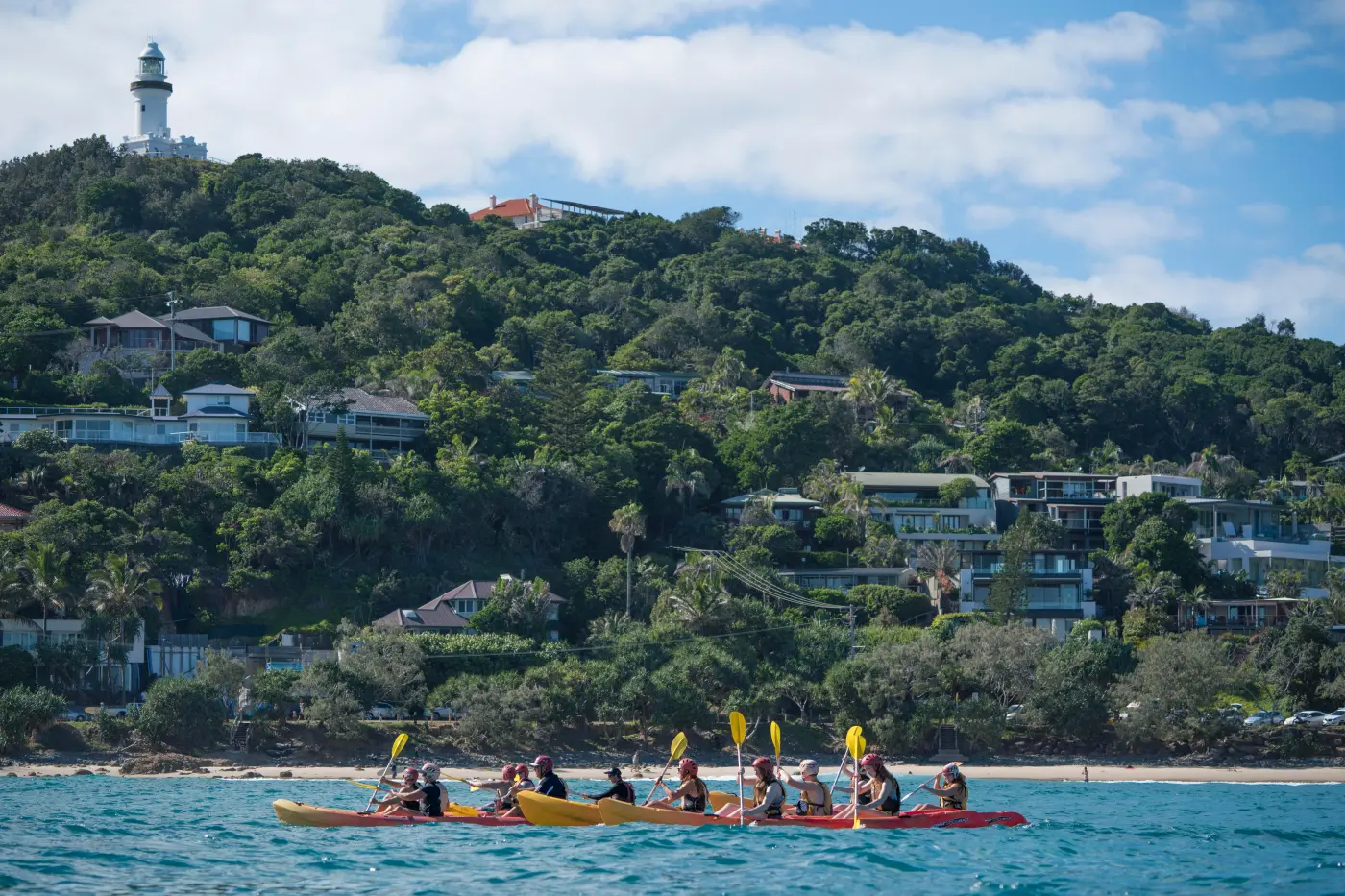
Kayaking Byron Bay price typically ranges from $65 for a two-hour sunrise paddle to $180 for full-day wildlife expeditions with marine biologist guides. Most half-day tours—covering dolphin and turtle spotting in the marine park—cost $95 to $120 and include all equipment, safety briefings, and wetsuit hire during cooler months. Private charters and multi-day itineraries command premium rates but offer flexible departure times and tailored wildlife focus.
The marine park's protected waters host more than 30 commercial kayak operators, and their fee structures reflect vastly different service models. Budget tours cluster around Julian Rocks and Belongil Beach, focusing on high-volume morning sessions with minimal instruction. Mid-tier operators add wildlife interpretation, photography support, and small-group caps that improve animal encounters without crowding the paddling zone. Premium expeditions venture into Fishermans Lookout and the northern sanctuary zones, where humpback whale migration routes intersect with calmer summer currents. Kayaking byron bay price differences stem from three cost drivers: guide expertise, group size, and equipment quality. A $65 tour typically means 12-person groups, basic sit-on-top kayaks, and a route that avoids exposed headlands. A $140 tour caps groups at six, uses ocean-grade touring kayaks with rudders, and employs guides trained in marine mammal behavior. The marine park imposes no entrance fee, so every dollar of your kayaking byron bay price goes to the operator—there's no ticket to Cape Byron itself, only the service you book. Seasonal pricing follows predictable patterns. June through October—when humpback whales pass through the sanctuary—commands 20 to 30 percent premiums for migration-focused paddles. November through March sees discounted rates as schools of juvenile dolphins replace the whale spectacle, and water temperatures climb above 23°C. Operators bundle wetsuits into winter pricing but charge separately in summer, a detail worth confirming when comparing quotes. Most tours depart from Main Beach or The Pass, launching directly from sand without boat ramps or jetties. This accessibility keeps costs lower than destinations requiring marina fees or shuttle transfers. The marine park's year-round operating window means no seasonal closures disrupt availability, though wind and swell conditions can force last-minute cancellations—reputable operators offer full refunds or rebooking without penalty when conditions exceed safe paddling thresholds.
“The marine park imposes no entrance fee, so every dollar of your tour price funds the guide, equipment, and the operator's expertise—not a ticket to the water itself.”
Cape Byron Marine Park operates as a public waterway with unrestricted access available throughout the week.
The best arrival window for kayaking at Cape Byron Marine Park is 08:00–10:00. This period offers calmer waters, lower wind speeds, and superior conditions for wildlife spotting.
18°C–22°C; whale migration season
The prime period for whale sightings alongside calmer morning water conditions.
23°C–28°C; summer humidity
Warmer water temperatures are common, though early morning remains essential to avoid afternoon sea breezes.
—
Mid-week mornings provide the most consistent access to calm, protected waters before wind speeds increase later in the day.
Verdict: For the best conditions, plan your visit for a weekday morning between 08:00–10:00 during the shoulder months of April or October.
Cape Byron Marine Park is located at Byron Bay, NSW 2481, Australia. Most kayak tours depart from the main beach areas easily accessed from the town centre.
Follow the Pacific Motorway (M1) and take the Ewingsdale Road exit into Byron Bay
Take the Byron Easybus or Greyhound service to the Byron Bay Interchange
Walk from the Byron Bay town centre toward the beachfront launch points
Parking in central Byron Bay can be limited, so visitors are encouraged to use public parking areas near the beachfront or arrive early to secure a spot before your scheduled departure.
Tour operators include core safety equipment, but confirming conditions and personal readiness ensures a smooth paddle through the marine park.
Everything you need to know about kayaking byron bay price
The Cape Byron Marine Park is a public waterway, meaning there is no specific kayaking Byron Bay price for entry itself. Most visitors book guided tours with local operators to access equipment and expert knowledge of the coastline.
No, there is 0 AUD entry fee for the marine park as it is a public waterway. You are free to enjoy the area without paying a general admission charge to the park authorities.
While the entry is free, the kayaking Byron Bay price set by tour operators may vary based on peak seasons, duration, and included amenities. We recommend comparing guided packages to find the experience that best fits your travel budget.
No, the water is a public asset and remains free to access for recreational use. When you book a tour, you are paying for gear, safety briefings, and guide services rather than access to the ocean itself.
Commercial tour operators typically include any required regulatory permit fees in their total booking cost. Always check the inclusions of your selected provider to understand what the total kayaking Byron Bay price covers before you finalize your reservation.
The best time to plan your visit is between 08:00 and 10:00 to ensure calm waters and better wildlife spotting. Booking during these hours often provides the best value for your trip, as conditions for paddling are typically at their most favorable.
There are no government-mandated hidden costs for exploring the marine park independently. However, if you choose to join a guided excursion, ensure you confirm all inclusions to fully understand the total investment required for your coastal activity.