
English| EUR
Suggested for you
More currencies
Choose a language
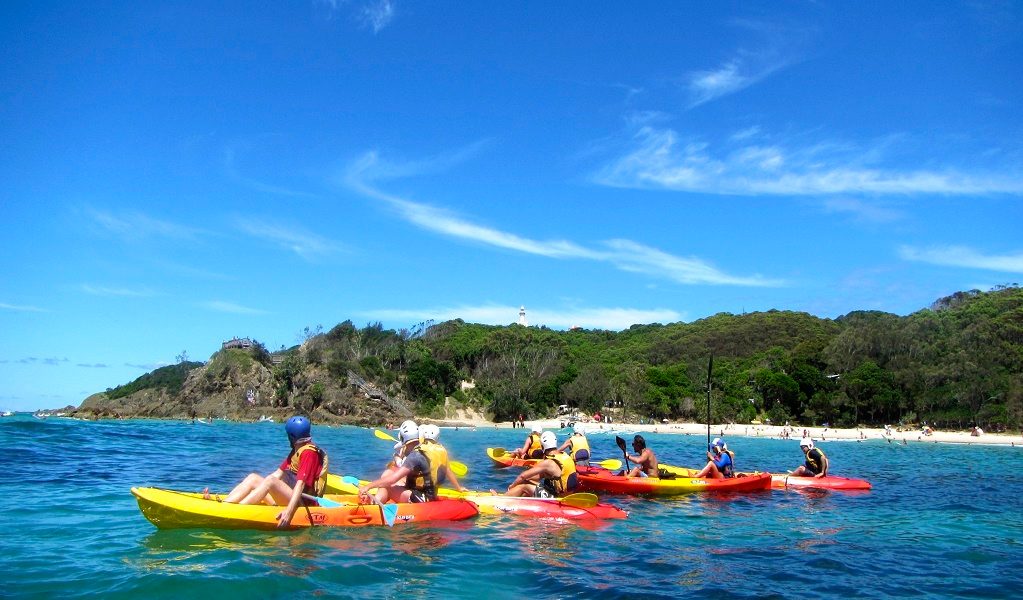
Cape Byron Marine Park stretches across 22,000 hectares of protected waters where Byron Bay's kayaking routes thread between sheltered coves and open ocean passages. The marine park's paddle zones range from beginner-friendly Julian Rocks circuits to advanced routes beneath the lighthouse cliffs. This guide evaluates tour operators, launch windows and seasonal wildlife patterns.
Quick answer
The best kayak tour byron bay options launch between 8:00 and 11:00 when wind speeds drop below 15 knots and water clarity peaks for dolphin sightings. Guided marine park routes typically run 2.5 to 3 hours, covering 6 to 8 kilometers from Clarkes Beach or The Pass. Cape Byron's sanctuary zones prohibit motorized vessels, making kayak access the primary method for close-range observation of bottlenose dolphins and migrating humpback whales between June and October.
Cape Byron Marine Park holds Australia's easternmost mainland point, where the continental shelf drops to 400 meters within two nautical miles of shore—a geography that funnels nutrient-rich currents through Byron Bay's kayaking corridor and sustains year-round marine biodiversity. The park's designated paddling routes intersect three sanctuary zones where commercial fishing and anchoring prohibitions have allowed seagrass meadows and kelp forests to regenerate since the park's establishment in 2002. Byron Bay kayak operators concentrate their marine park tours along two primary routes. The northern circuit departs Clarkes Beach, rounding Cape Byron's granite headland to reach Wategos Beach—a 4-kilometer paddle that passes directly beneath the 1901 lighthouse and tracks the migratory corridor used by 15,000 humpback whales each austral winter. The southern route launches from The Pass, following Tallow Beach's six-kilometer arc to Broken Head, where sheltered bays and rock platforms create calmer conditions for novice paddlers. Both routes cross feeding grounds used by resident bottlenose dolphin pods, with peak sighting probability occurring during the early-morning flood tide when baitfish aggregate near shore. Guided tours supply double kayaks, spray skirts and dry bags; solo paddlers launching from public beaches must carry navigation lights and remain outside the 200-meter wildlife approach buffer enforced by NSW Marine Parks Authority rangers. Water temperature ranges from 19°C in August to 24°C in February, requiring at minimum a spring wetsuit for winter paddles. The marine park's free-entry policy applies to all self-propelled watercraft—kayakers pay no gate fees, though commercial tour operators hold conditional permits limiting group sizes to eight boats per departure. Seasonal variation governs route selection more than operator choice. Winter months deliver consistent whale sightings but rougher seas and 7:30 AM sunrises that compress the optimal launch window; summer brings glassy dawn conditions and manta ray aggregations off Julian Rocks, though increased boat traffic and northeasterly afternoon winds cut touring hours short. The best kayak tour byron bay experiences synchronize departure times with tide charts, targeting the two-hour window after low tide when current assists the outbound leg and returning paddlers ride the incoming flow.
“Cape Byron's sanctuary zones prohibit motorized vessels, making kayak access the primary method for close-range observation of bottlenose dolphins and migrating humpback whales.”
The best arrival window for a kayak tour in Cape Byron Marine Park is 08:00–11:00, which offers the most consistent water conditions and lowest wind speeds. Planning your visit during this time maximizes your chances for stable paddling across the marine park.
Cooler water (19°C–21°C), light winds
Winter months frequently offer the calmest sea conditions for kayaking. Dolphins are often active during this period.
Warm temperatures (22°C–25°C)
Spring provides pleasant weather and manageable winds before the summer heat. This is a reliable time for calm water paddling.
Warmer water (24°C–26°C), potential afternoon sea breezes
Summer offers warmer water, though afternoon wind patterns can increase. Morning tours remain the priority to avoid stronger winds.
Verdict: For the most stable paddling, aim for an 08:00–11:00 arrival between May and October when wind speeds are generally lower.
Cape Byron Marine Park waters are accessible 24 hours a day, seven days a week. Please note that kayak tours operate according to specific local provider schedules.
Cape Byron Marine Park is located at Byron Bay, NSW 2481, Australia. Most kayak tour operators congregate near the main beach area in the township for departure.
Follow Ewingsdale Road into Byron Bay township
Walk from Byron Bay town centre toward the main beach
Request drop-off at Lawson Street or Main Beach
Plan your arrival for the 08:00–11:00 window to take advantage of optimal water conditions and lower wind speeds. Parking in the town centre fills quickly, so allow extra time to locate a space.
Pack smart for the marine environment and shifting conditions on the water.
Everything you need to know about best kayak tour byron bay
The Cape Byron Marine Park is a sanctuary where dolphins, sea turtles, and whales are frequently sighted during guided excursions. Choosing a local operator ensures you learn about the indigenous heritage and delicate ecosystem of this protected habitat.
There is no gate fee to enter the marine park waters, as entry is 0 AUD. You may only incur costs when booking a commercial provider for equipment and guidance.
The best arrival window is between 08:00 and 11:00 to take advantage of optimal water conditions and lower wind speeds. Planning your visit during these hours significantly enhances the stability and comfort of your paddle.
Yes, most commercial providers offer tandem vessels suitable for families. Ensure you check with your chosen operator regarding age requirements and water confidence levels for younger participants.
The park is located at Cape Byron Marine Park, Byron Bay, NSW 2481, Australia. Most visitors arrive via private vehicle or local shuttle services that drop off near the main beach access points.
Visitors must follow all environmental regulations to protect the habitat, including maintaining a safe distance from marine life and not removing any natural items. Please respect signage and zoning restrictions to help conserve this biodiversity hotspot.
For any coastal sea paddling session, pack sun protection, a water bottle, and a change of clothes. Most operators provide life jackets and necessary safety gear as part of their standard service package.