
English| EUR
Suggested for you
More currencies
Choose a language
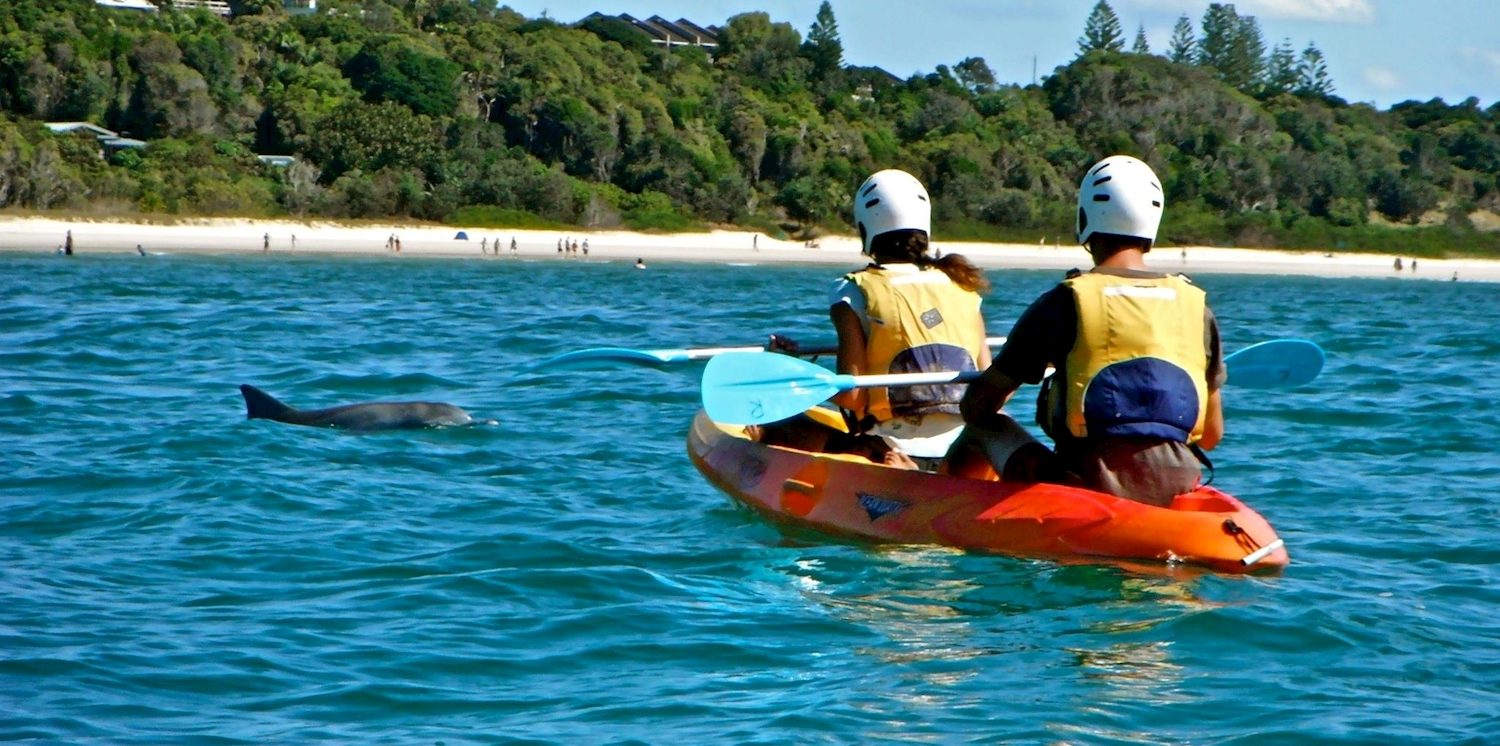
Cape Byron Marine Park protects 22,000 hectares of subtropical coastline where Indo-Pacific bottlenose dolphins feed year-round and green sea turtles surface in nearshore channels. Guided kayak departures launch from several beaches within the reserve, timing paddles to coincide with calm morning conditions and peak wildlife activity between Julian Rocks and the Cape Byron headland.
Quick answer
A byron bay sea kayak tour with dolphins and turtles operates daily within Cape Byron Marine Park, with morning launches between 08:00–11:00 offering the highest probability of wildlife encounters. The marine park itself requires no entrance fee, though vehicle parking in adjacent reserves incurs a standard daily charge. Dolphin sightings occur in 70–80% of guided paddles during calmer months, while turtle encounters depend on water temperature and seasonal migration patterns along the eastern Australian current.
Cape Byron Marine Park sits at the confluence of warm tropical currents and temperate southern waters, creating nutrient upwellings that draw resident dolphin pods and migratory megafauna within kayaking range of the shore. The park's sanctuary zones extend three nautical miles offshore, protecting critical foraging habitat where bottlenose dolphins hunt schooling fish and loggerhead turtles rest between dives. Morning departures exploit the glassy surface conditions that prevail before the nor-easterly sea breeze builds after midday. Guides route paddles through Belongil Creek mouth or Tallow Beach access points, tracking parallel to the coast toward Julian Rocks—a submerged volcanic outcrop 2.5 kilometres offshore that functions as a cleaning station for green and loggerhead turtles. Dolphin encounters typically occur within 500 metres of the surf line, where pods of four to twelve animals patrol the break zone. Turtles surface intermittently in deeper channels, their dark carapaces visible against the turquoise water column when sea state allows. The byron bay sea kayak tour with dolphins and turtles guide operates under NSW National Parks permits that mandate no-approach distances of 50 metres for dolphins and 20 metres for turtles. Operators adjust routes in real time based on radio reports from other vessels and visual scanning from elevated beach vantage points. Winter months (June–August) produce the clearest water visibility but colder ocean temperatures; spring and autumn balance moderate swell with higher turtle activity as animals migrate along the eastern seaboard. Parking within Cape Byron State Conservation Area costs 8 AUD per vehicle for 24-hour access, payable at automated Pay and Display stations near Wategos Beach and the Cape Byron lighthouse trailhead. Launch sites at Clarkes Beach and The Pass offer vehicle drop-off zones, though long-term parking requires use of the town's metered streets or the paid lot at the base of Lighthouse Road. Contact the marine park office on +61 2 6639 8300 for current water quality reports and temporary sanctuary zone closures during whale calving season.
“The park's sanctuary zones protect critical foraging habitat where bottlenose dolphins hunt schooling fish and loggerhead turtles rest between dives.”
The best arrival window for sea kayaking in Cape Byron Marine Park is 08:00–11:00, providing optimal light and calmer morning waters to observe dolphins and turtles. This timeframe minimizes the impact of midday wind and heat, offering the most stable conditions for wildlife spotting.
Mild, 18–25°C
Spring offers gentle conditions and frequent turtle sightings in the bay.
Warm, 21–28°C
Early morning paddles help avoid afternoon sea breezes and peak heat.
Pleasant, 19–26°C
Clearer water visibility often occurs during these months, improving wildlife spotting.
Cool, 15–21°C
The cooler water remains suitable for kayaking and coincides with peak whale migration.
Verdict: For the calmest water and highest likelihood of marine life encounters, aim for the 08:00–11:00 arrival window during the shoulder months of April or October.
Access to the Cape Byron Marine Park is free of charge. Visitors should be aware that costs for a sea kayak experience are determined by private tour operators, while vehicle parking fees apply at nearby reserves.
Verdict: Entrance to the marine park is 0 AUD, though visitors often pay vehicle parking fees at designated reserves when arriving for a kayak tour.
Cape Byron Marine Park is accessible to the public 24 hours a day, seven days a week. Visitors may enter the marine park boundaries at any time.
Cape Byron Marine Park is located at Byron Bay, NSW 2481, Australia. The most common approach for kayak tours is via the main township of Byron Bay, providing direct access to the launch points along the coastline.
M1 Pacific Motorway to Ewingsdale Road
NSW TrainLink or regional bus to Byron Bay Interchange
Walk from Byron Bay town center to Clarkes Beach
Parking is available in various reserves near the marine park, though local council fees apply for vehicle parking. Arriving early ensures better access to these designated parking areas before peak visitor numbers.
Cape Byron Marine Park enforces strict approach distances to protect dolphins, turtles, and other marine life. Kayakers must follow federal and state wildlife interaction regulations to avoid fines and habitat disturbance.
Prepare for a marine kayak trip by booking ahead and packing sun protection, reef-safe essentials, and a waterproof layer.
Everything you need to know about byron bay sea kayak tour with dolphins and turtles
Participants often encounter bottlenose dolphins, sea turtles, and migrating humpback whales depending on the season within Cape Byron Marine Park. These marine mammals and reptiles frequently inhabit the protected waters of this coastal sanctuary.
Yes, these excursions are designed for various skill levels, including first-time paddlers. Professional guides provide safety briefings and equipment instruction to ensure a comfortable experience for everyone on the water.
The best arrival window for these activities is between 08:00 and 11:00. During this morning period, you can expect calmer ocean conditions and optimal light for spotting local fauna while avoiding the heat of the day.
The Cape Byron Marine Park itself has an entrance fee of 0 AUD, meaning access to the park is free. Please note that while park entry is free, individual operators manage their own service fees, and local vehicle parking reserves may charge additional rates.
You should prepare for your coastal journey by bringing sun protection, such as a hat and water-resistant sunscreen, along with a reusable water bottle. Wearing swimwear or quick-dry clothing is recommended, as you will likely get wet during your aquatic adventure.
Most providers accommodate families, though age and size restrictions for personal flotation devices usually apply. It is advisable to check the specific requirements of your chosen tour operator to ensure the activity is safe for younger children.